Mô hình nến là các hình dạng giá trực quan giúp trader xác định khả năng đảo chiều, tiếp diễn xu hướng và sự do dự của thị trường. Các mô hình quan trọng nhất là Hammer (Nến Búa), Bullish Engulfing (Nhấn Chìm Tăng), Morning Star (Sao Mai), Shooting Star (Sao Đổi Ngôi), Bearish Engulfing (Nhấn Chìm Giảm), Evening Star (Sao Hôm) và Doji.
Mô hình nến là các hình dạng trên biểu đồ thể hiện cuộc chiến giữa người mua và người bán trong một khoảng thời gian nhất định. Mỗi cây nến hiển thị giá mở, giá cao nhất, giá thấp nhất và giá đóng, giúp trader đọc được động lượng, sự từ chối giá và các điểm đảo chiều có thể xảy ra. Trader sử dụng các mô hình này để xác định đảo chiều, tiếp diễn xu hướng và những thời điểm thị trường do dự trên forex, cổ phiếu, chỉ số, hàng hóa và tiền điện tử. Các mô hình này không phải là tín hiệu kỳ diệu, nhưng chúng trở nên hữu ích khi được kết hợp với phân tích xu hướng, hỗ trợ và kháng cự, cùng sự xác nhận từ khối lượng hoặc các chỉ báo.
Mô Hình Nến Là Gì?
Mô hình nến là các hình dạng giá lặp lại phản ánh tâm lý thị trường. Một cây nến đơn lẻ có thể cho thấy sự do dự, sức mạnh hoặc sự từ chối giá, trong khi một nhóm nến có thể cho thấy sự thay đổi hướng đi mạnh mẽ hơn. Trader sử dụng chúng vì giá thường để lại các gợi ý trước khi một biến động lớn hơn xảy ra.
- Mô hình tăng cho thấy người mua có thể đang giành quyền kiểm soát.
- Mô hình giảm cho thấy người bán có thể đang giành quyền kiểm soát.
- Mô hình trung tính cho thấy thị trường đang do dự.
Phân tích mô hình nến thuộc về giao dịch theo hành động giá, phương pháp tập trung vào những gì giá đang thể hiện thay vì chỉ dựa vào các chỉ báo.
Vì Sao Trader Sử Dụng Chúng
Mô hình nến giúp trader ra quyết định nhanh hơn bằng cách biến dữ liệu giá thô thành một cấu trúc dễ đọc. Chúng đặc biệt hữu ích khi thị trường đang tiếp cận một mức giá quan trọng, như hỗ trợ, kháng cự, đường xu hướng, hoặc đường trung bình động. Chúng cũng giúp trader chờ xác nhận thay vì vào lệnh một cách mù quáng.
Trader sử dụng chúng để:
- Phát hiện khả năng đảo chiều.
- Xác nhận sự tiếp diễn xu hướng.
- Định thời điểm vào và ra lệnh.
- Hiểu tâm lý thị trường ngắn hạn.
- Lọc các đột phá giả.
Các thiết lập nến tốt nhất thường xuất hiện khi mô hình, vị trí và sự xác nhận cùng khớp với nhau.
Các Mô Hình Tăng
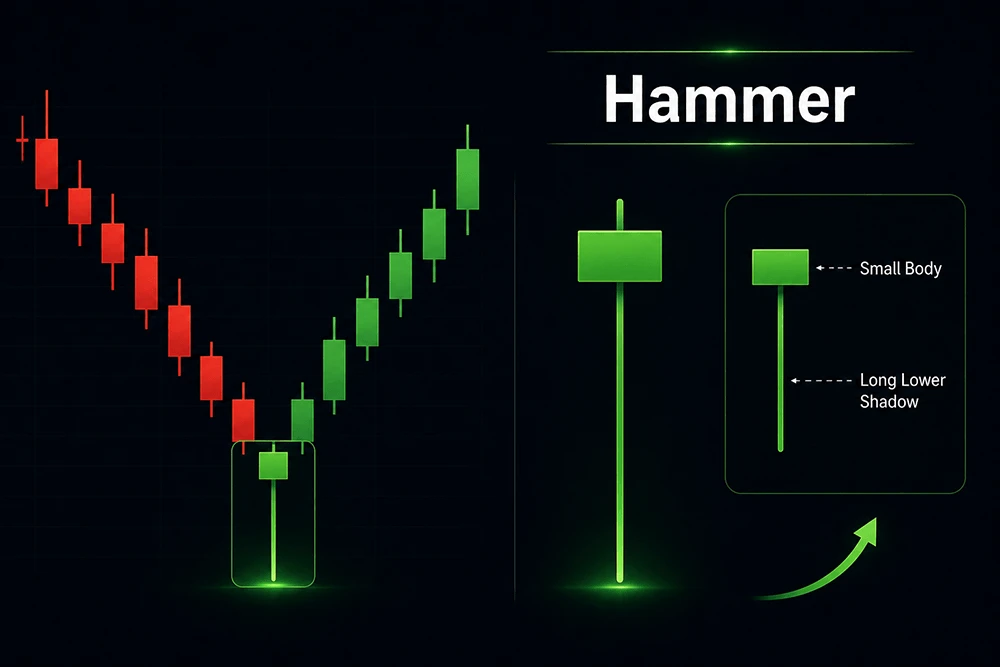
Hammer (Nến Búa)
Nến Hammer hình thành sau một đợt giảm giá và có thân nhỏ với bóng dưới dài. Nó cho thấy người bán đã đẩy giá xuống, nhưng người mua đã phục hồi lại phần lớn biến động trước khi nến đóng cửa. Điều này thường gợi ý khả năng đảo chiều tăng.
Nến Hammer mạnh hơn khi xuất hiện gần vùng hỗ trợ hoặc sau một xu hướng giảm rõ ràng. Riêng nó chỉ là một dấu hiệu cảnh báo, không phải là sự bảo đảm.
Bullish Engulfing (Nhấn Chìm Tăng)
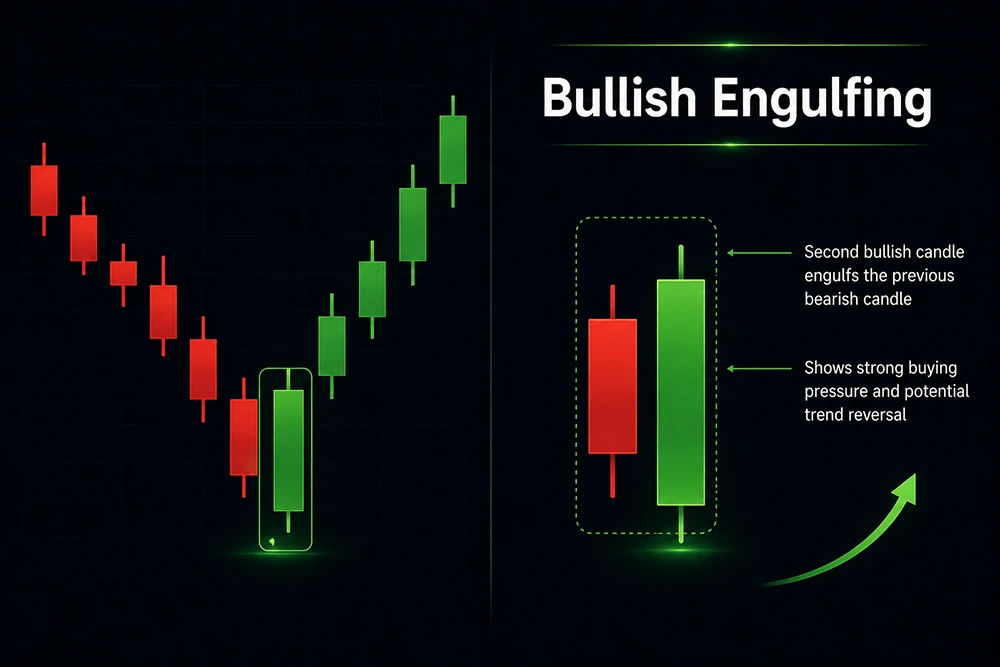
Mô hình Bullish Engulfing xuất hiện khi một cây nến tăng mạnh bao trùm hoàn toàn thân của cây nến giảm trước đó. Nó cho thấy người mua đã giành quyền kiểm soát sau một giai đoạn áp lực bán. Đây là một trong những mô hình đảo chiều được theo dõi rộng rãi nhất.
Mô hình này đáng tin cậy hơn khi cây nến thứ hai đóng cửa cao hơn hẳn giá mở của cây nến trước. Điều đó cho thấy động lượng có ý nghĩa, không chỉ là một sự bật nhẹ.
Morning Star (Sao Mai)
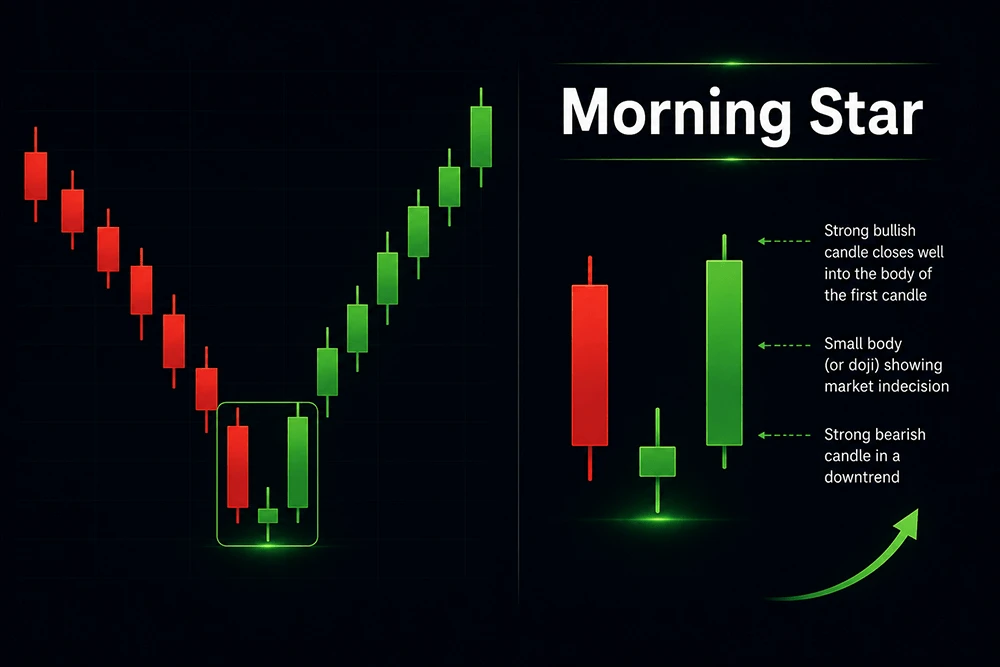
Mô hình Morning Star là mô hình đảo chiều tăng gồm ba cây nến. Cây nến đầu tiên giảm, cây nến thứ hai thể hiện sự do dự, và cây nến thứ ba là một cây nến tăng mạnh. Cùng nhau, chúng cho thấy áp lực bán đang suy yếu và người mua đang nhập cuộc.
Mô hình này đặc biệt hữu ích sau một đợt giảm giá kéo dài. Cây nến thứ ba là cây nến xác nhận quan trọng.
Các Mô Hình Giảm
Shooting Star (Sao Đổi Ngôi)
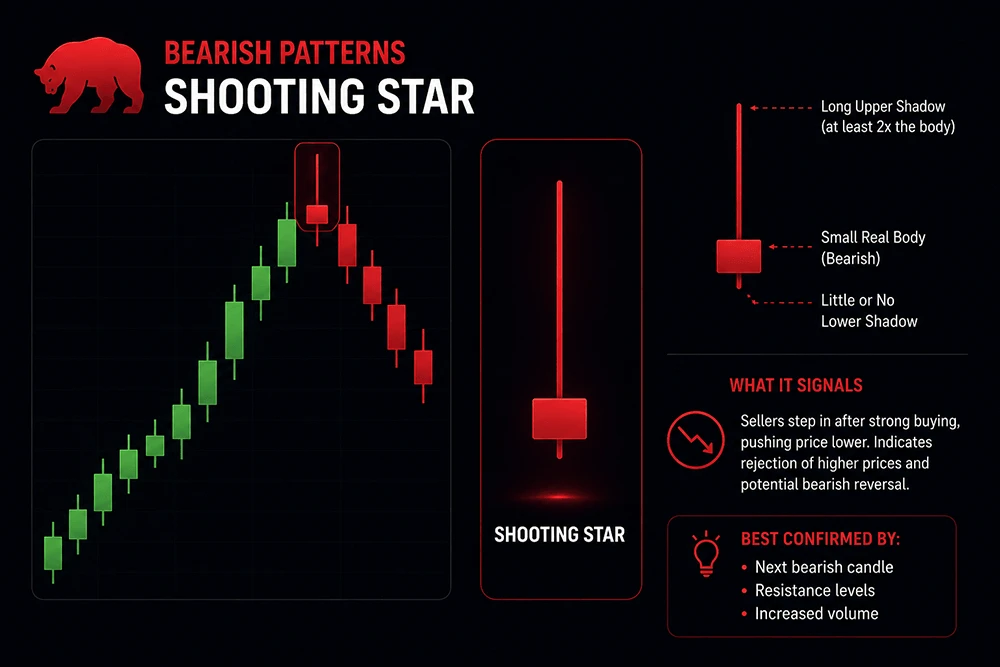
Nến Shooting Star hình thành sau một đợt tăng giá và có thân nhỏ với bóng trên dài. Nó cho thấy người mua đã đẩy giá lên cao hơn, nhưng người bán đã buộc giá quay xuống trước khi đóng cửa. Điều này thường báo hiệu khả năng đảo chiều giảm.
Nó trở nên có ý nghĩa hơn khi xuất hiện gần vùng kháng cự hoặc sau một đợt tăng mạnh. Bối cảnh quan trọng hơn hình dạng của cây nến đơn thuần.
Bearish Engulfing (Nhấn Chìm Giảm)
Mô hình Bearish Engulfing xuất hiện khi một cây nến giảm mạnh bao trùm hoàn toàn thân của cây nến tăng trước đó. Nó cho thấy người bán đã áp đảo người mua và có thể đang giành quyền kiểm soát. Trader thường xem đây là dấu hiệu của một đỉnh ngắn hạn.
Mô hình này mạnh hơn khi xuất hiện sau một xu hướng tăng rõ ràng và đóng cửa gần mức thấp nhất của nến. Điều đó cho thấy áp lực bán vẫn còn tiếp diễn.
Evening Star (Sao Hôm)
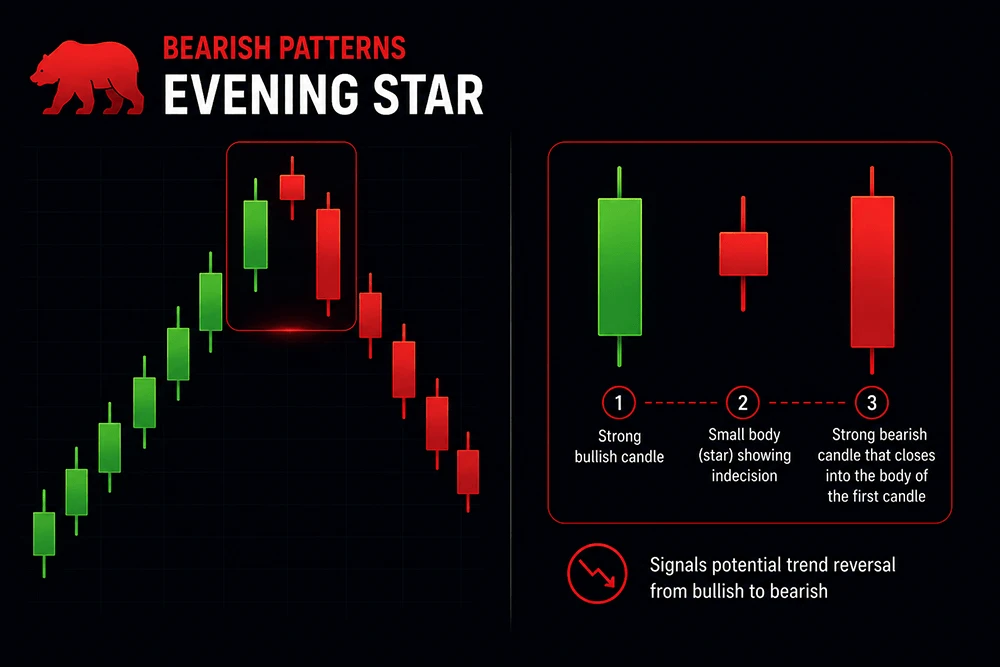
Mô hình Evening Star là phiên bản giảm của Morning Star. Nó gồm ba cây nến: một cây nến tăng, một cây nến nhỏ thể hiện sự do dự, và sau đó là một cây nến giảm mạnh. Nó thường xuất hiện sau một đợt tăng giá và có thể báo hiệu động lượng đang chuyển hướng xuống.
Mô hình này hoạt động tốt nhất khi cây nến thứ ba đóng cửa sâu vào thân của cây nến đầu tiên. Điều đó xác nhận tín hiệu đảo chiều.
Các Mô Hình Trung Tính
Doji
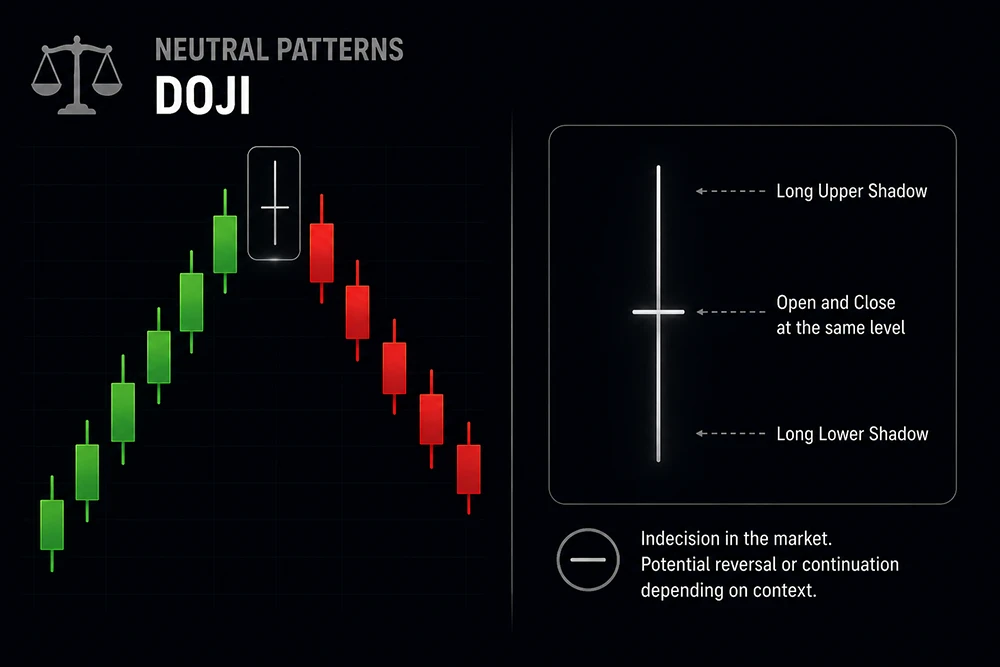
Nến Doji hình thành khi giá mở và giá đóng gần như bằng nhau. Nó cho thấy sự do dự và trạng thái cân bằng tạm thời giữa người mua và người bán. Doji có thể xuất hiện trước một sự đảo chiều, nhưng cũng có thể xuất hiện trong giai đoạn tích lũy mà không gây ra biến động lớn.
Cây nến này trở nên có ý nghĩa hơn khi xuất hiện sau một xu hướng mạnh hoặc tại một mức giá quan trọng trên biểu đồ. Cây nến tiếp theo thường cung cấp manh mối thực sự.
Cách Sử Dụng Chúng
Mô hình nến hoạt động tốt nhất khi được dùng như công cụ xác nhận, không phải là tín hiệu độc lập. Bối cảnh xung quanh càng mạnh, mô hình càng có xu hướng hoạt động tốt. Một mô hình xuất hiện gần vùng hỗ trợ hoặc kháng cự có ý nghĩa hơn cùng mô hình đó xuất hiện ở giữa một biên độ giá ngẫu nhiên.
Hãy sử dụng quy trình đơn giản này:
- Xác định xu hướng.
- Đánh dấu vùng hỗ trợ và kháng cự.
- Tìm một mô hình nến tại một mức giá có ý nghĩa.
- Chờ xác nhận từ cây nến tiếp theo.
- Kiểm tra khối lượng hoặc các chỉ báo động lượng.
- Quản lý rủi ro với lệnh cắt lỗ (stop loss).
Mô Hình | Tín Hiệu | Loại | Vị Trí Thường Gặp |
Hammer | Đảo chiều tăng | Tăng | Cuối xu hướng giảm |
Bullish Engulfing | Đảo chiều tăng | Tăng | Cuối xu hướng giảm |
Morning Star | Đảo chiều tăng | Tăng | Cuối xu hướng giảm |
Shooting Star | Đảo chiều giảm | Giảm | Cuối xu hướng tăng |
Bearish Engulfing | Đảo chiều giảm | Giảm | Cuối xu hướng tăng |
Evening Star | Đảo chiều giảm | Giảm | Cuối xu hướng tăng |
Doji | Do dự | Trung tính | Bất kỳ xu hướng |
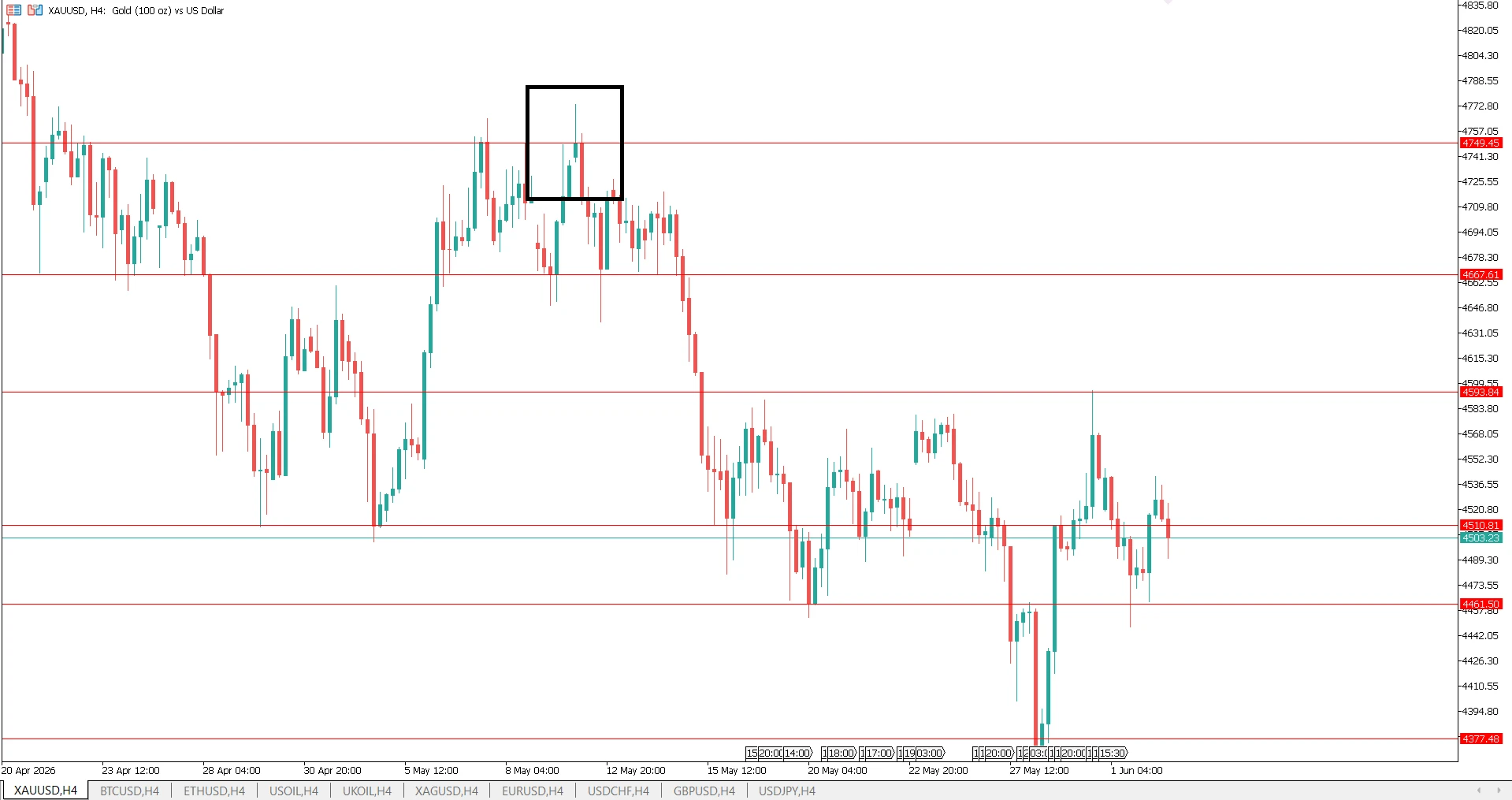
Ví dụ: Một bóng trên dài sau một xu hướng tăng, đặc biệt là gần vùng kháng cự, thường báo hiệu một nến Shooting Star hoặc pin bar giảm. Cây nến này cho thấy người mua đã đẩy giá lên cao hơn, nhưng người bán đã nhập cuộc và buộc giá quay xuống trước khi đóng cửa, điều này có thể gợi ý sự từ chối giá theo chiều giảm và khả năng đảo chiều.
Những Sai Lầm Thường Gặp
Nhiều trader mất tiền vì họ coi mô hình nến như những tín hiệu tự động. Điều đó thường dẫn đến các điểm vào lệnh kém và những khoản lỗ không cần thiết. Mô hình quan trọng, nhưng vị trí và bối cảnh thị trường còn quan trọng hơn.
Tránh những sai lầm này:
- Giao dịch mọi mô hình bạn thấy.
- Bỏ qua xu hướng chung.
- Sử dụng mô hình mà không có xác nhận.
- Mua vào một mô hình tăng khi gặp vùng kháng cự lớn.
- Bán ra một mô hình giảm khi gặp vùng hỗ trợ lớn.
Một mô hình là một gợi ý, không phải một lệnh phải tuân theo.
Những Mô Hình Quan Trọng Nhất
Đối với đa số trader, những mô hình thực tế nhất là Hammer, Shooting Star, Bullish Engulfing, Bearish Engulfing, Morning Star, Evening Star và Doji. Đây là những mô hình dễ nhận biết và thường xuất hiện tại các điểm đảo chiều quan trọng. Chúng cũng hữu ích trên nhiều thị trường khác nhau vì phản ánh cùng hành vi giữa người mua và người bán.
Nếu bạn là người mới bắt đầu, hãy bắt đầu với:
- Doji.
- Hammer.
- Shooting star.
- Bullish engulfing.
- Bearish engulfing.
Những mô hình này cho bạn nền tảng vững chắc để đọc hành động giá.
Chúng Đáng Tin Cậy Đến Mức Nào
Mô hình nến có độ tin cậy tương đối khi được sử dụng đúng cách, nhưng chúng không hoàn hảo. Độ chính xác của chúng phụ thuộc vào bối cảnh xu hướng, độ biến động thị trường, khung thời gian và sự xác nhận. Một mô hình trông có vẻ mạnh trên biểu đồ 1 phút có thể không có nhiều ý nghĩa so với cùng mô hình đó trên biểu đồ ngày.
Kết quả tốt nhất thường đến từ việc kết hợp:
- Hướng xu hướng.
- Hỗ trợ và kháng cự.
- Khối lượng.
- RSI hoặc MACD.
- Quản lý rủi ro rõ ràng.
Đây là lý do các trader chuyên nghiệp coi nến là một phần của quá trình quyết định rộng hơn.
Câu Hỏi Thường Gặp
Mô hình nến nào đáng tin cậy nhất?
Các mô hình Bullish Engulfing và Bearish Engulfing thuộc số những mô hình hữu ích nhất vì chúng cho thấy sự chuyển giao quyền kiểm soát rõ ràng giữa người mua và người bán.
Mô hình nến có hiệu quả trên mọi thị trường không?
Có, chúng có thể được sử dụng trong forex, cổ phiếu, chỉ số, hàng hóa và tiền điện tử vì chúng phản ánh tâm lý thị trường mang tính phổ quát.
Người mới có thể học mô hình nến dễ dàng không?
Có. Các mô hình cơ bản rất dễ nhận biết, đặc biệt khi trader tập trung vào một vài hình dạng cốt lõi trước tiên.
Có nên chỉ sử dụng mô hình nến một mình không?
Không. Chúng hoạt động tốt nhất khi được kết hợp với phân tích xu hướng, hỗ trợ và kháng cự, cùng các chỉ báo xác nhận.
Nhận Định Cuối Cùng
Mô hình nến có giá trị vì chúng giúp trader đọc được hành vi giá một cách nhanh chóng và rõ ràng. Những mô hình quan trọng nhất là những mô hình xuất hiện đúng vị trí, đúng thời điểm và có sự xác nhận. Nếu bạn tập trung vào một vài thiết lập cốt lõi và tránh giao dịch mọi cây nến bạn thấy, phân tích mô hình nến sẽ trở thành một lợi thế thực tế thay vì một trò chơi may rủi.
Giới Thiệu Tác Giả
Vanessa Polson là quản lý marketing tại NordFX với hơn mười hai năm kinh nghiệm trong lĩnh vực marketing trực tuyến ngành dịch vụ tài chính. Cô đã xây dựng và triển khai các chiến dịch dựa trên dữ liệu trên các kênh tìm kiếm, mạng xã hội và hiển thị trong môi trường nội bộ doanh nghiệp. Công việc của cô tập trung vào việc chuyển hóa các sản phẩm tài chính và công cụ giao dịch phức tạp thành nội dung giáo dục rõ ràng, thực tế, mang lại cho cô một cái nhìn toàn diện và sâu sắc về bối cảnh giao dịch toàn cầu.
Kết nối với Vanessa trên LinkedIn.
Quay lại Quay lại