How to short (sell) bitcoin?
Short answer: Shorting Bitcoin means selling it at a higher price and buying it back later at a lower price to profit from the difference. Traders typically do this using margin trading or derivatives like perpetual contracts.
What does it mean to short Bitcoin?
In trading, there are two core directions:
- Long position → profit when price goes up
- Short position → profit when price goes down
Shorting Bitcoin is essentially betting that the price will fall.
Mechanically, it works like this:
- You open a short position
- The system sells Bitcoin at the current price
- Price drops
- You buy it back cheaper
- The difference is your profit

How shorting Bitcoin works (simple example)
Example:
- You short BTC at $60,000
- Price drops to $55,000
- You close the position
Result:
- Profit = $5,000 per BTC (before fees)
This process is automated on trading platforms like MetaTrader 4/5, so you don’t manually borrow or return assets.
When to short Bitcoin
Shorting works best in:
1. Bear markets
When the overall trend is downward.
2. Corrections during uptrends
Even in rising markets, short-term pullbacks happen.
3. Overbought conditions
Common signals:
- RSI above 70
- Strong resistance levels
- Weakening momentum
Based on observed patterns on MT4/MT5 execution, many short setups occur during temporary exhaustion after rapid price spikes.
Step-by-step: how to short Bitcoin
Step 1 — Open a trading account
Register with a broker that offers crypto CFDs or derivatives.
Step 2 — Choose BTC instrument
Select a pair like:
- BTC/USD
- BTC/USDT
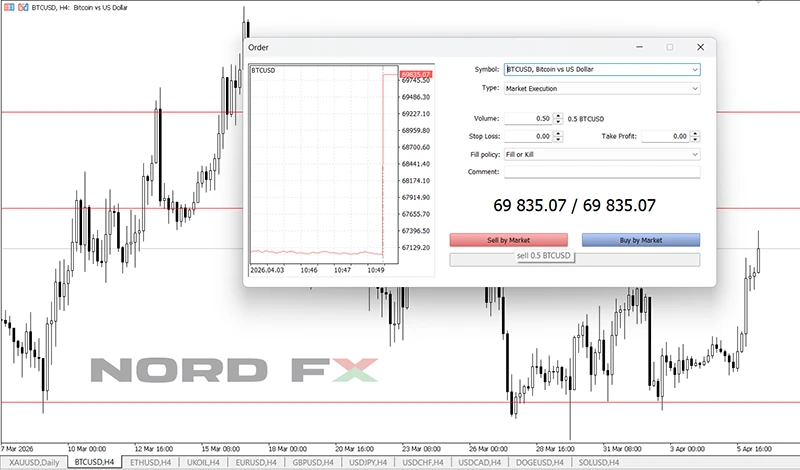
Step 3 — Select order type
- Market → instant execution
- Limit → specific price
- Stop → trigger-based
Step 4 — Click “Sell” (short)
This opens a short position.
Step 5 — Set risk controls
Always define:
- Stop-loss
- Take-profit
Step 6 — Close the trade
Buy back the position when your target is reached.
Risks of shorting Bitcoin
Shorting is fundamentally riskier than buying.
1. Unlimited losses
If price keeps rising, losses increase with no cap.
2. Liquidation risk
With leverage, your position can be closed automatically.
3. Volatility spikes
Crypto markets can move aggressively in minutes.
Internal trading behavior shows that most losses in short positions come from:
- entering too early
- using excessive leverage
- ignoring trend direction
Long vs short: key difference
Aspect | Long | Short |
Profit direction | Price ↑ | Price ↓ |
Max loss | Limited | Potentially unlimited |
Max gain | Unlimited | Limited |
Advanced ways to short Bitcoin
1. Margin trading
- Borrow funds to increase position size
- Higher risk, higher potential return
2. Perpetual contracts
- No expiry
- Most common method for shorting crypto
3. Futures and options
- Used for hedging and complex strategies
Simple strategy example
Basic short setup:
- Identify resistance level
- Confirm with indicator (e.g., RSI weakening)
- Enter short near resistance
- Place stop-loss above resistance
- Target next support level
This creates a clear risk-to-reward structure, which is critical.
Why traders short Bitcoin
Shorting is not just for profit — it’s also used for:
- Hedging existing positions
- Managing portfolio risk
- Trading volatility
A balanced trader uses both long and short strategies depending on market conditions.
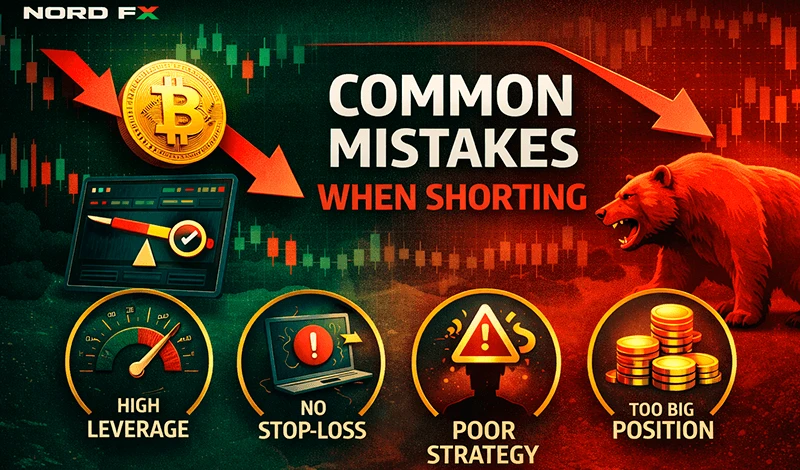
Common mistakes when shorting
Avoid these:
- Shorting strong uptrends blindly
- Using high leverage without control
- Ignoring macro events
- No stop-loss
Observed patterns on MT4/MT5 execution show that disciplined risk management is the main factor separating profitable traders from losing ones.
Should you short Bitcoin?
Shorting is suitable if you:
- Understand market structure
- Can manage risk strictly
- Accept higher volatility
For beginners, it’s recommended to:
- Start with small positions
- Use low or no leverage
- Practice on demo accounts
Final thoughts
Shorting Bitcoin expands your trading toolkit. It allows you to:
- Profit in falling markets
- Trade both directions
- Manage risk more effectively
However, it requires discipline, timing, and strong risk control.
If used correctly, shorting can turn market downturns into opportunities — but without proper strategy, it can quickly lead to losses.
FAQ
How to short Bitcoin?
To short Bitcoin, a trader opens a sell position and aims to profit if the price falls. The position is later closed by buying back at a lower price.
What does it mean to short Bitcoin?
Shorting Bitcoin means trading with the expectation that BTC will decline in value, allowing the trader to benefit from a downward move.
Can beginners short Bitcoin?
Beginners can short Bitcoin, but it is considered a higher-risk strategy and requires careful risk management, especially in volatile markets.
Do you need to own Bitcoin to short it?
No, traders can short Bitcoin using instruments like crypto CFDs or margin trading without owning the actual asset.
What are the risks of shorting Bitcoin?
The main risks include sharp price reversals, high volatility, liquidation when using leverage, and losses that can grow quickly if the market moves up.
When is the best time to short Bitcoin?
The best time to short Bitcoin is usually when the market shows bearish momentum, weak price action, or technical signs of a possible decline.
How do traders manage risk when shorting Bitcoin?
Traders manage risk by using stop-loss orders, limiting leverage, controlling position size, and following a clear trading plan.
Risk Disclosure
Trading cryptocurrencies and derivatives involves high risk and may not be suitable for all investors. Prices are highly volatile and can move rapidly.
Short-selling and leverage can amplify losses, and you may lose more than your initial investment.
This content is for informational purposes only and does not constitute investment advice. Please assess your risk tolerance and trade responsibly.
戻る 戻る