What Is Margin Risk in Trading?
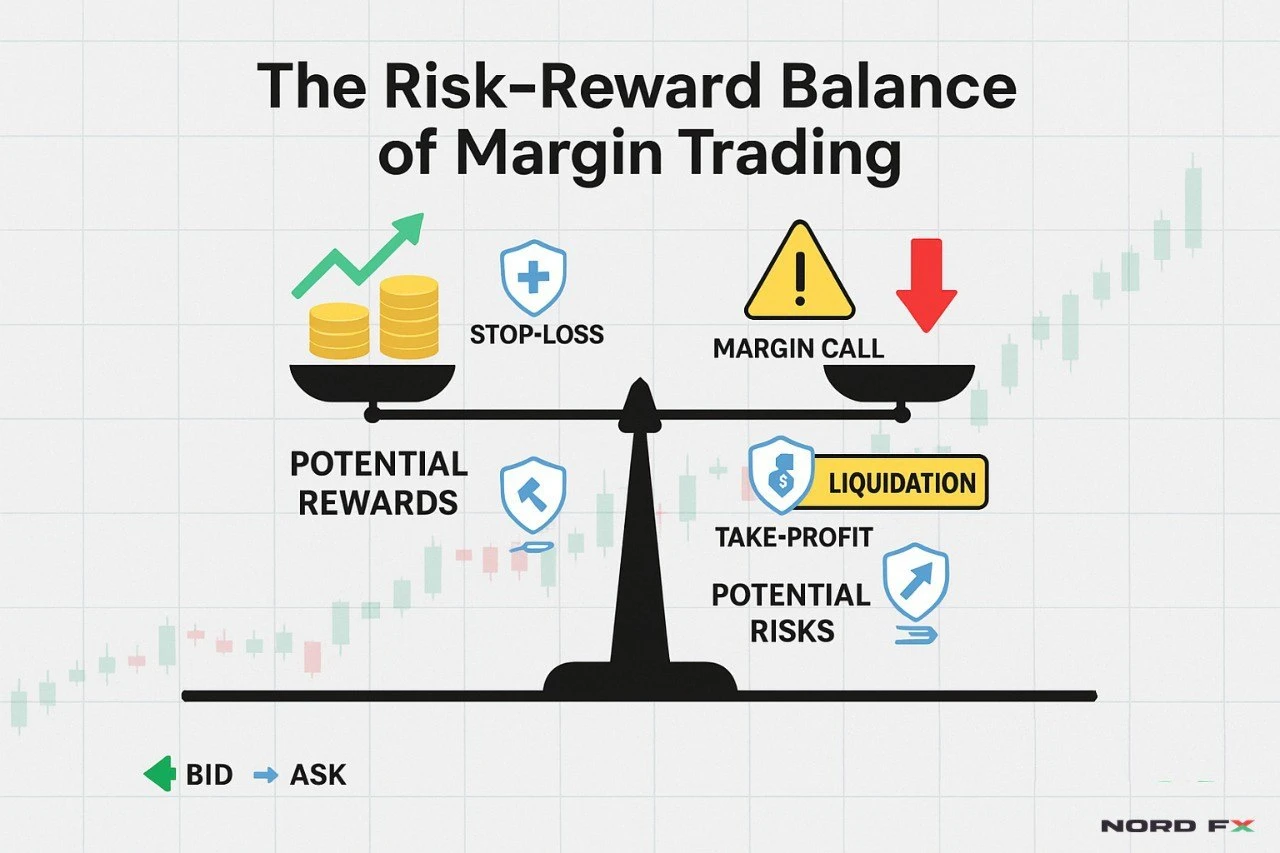
Margin risk is the possibility of losing money when trading with borrowed funds or leverage. If the market moves against the position, losses can grow quickly and may trigger a margin call or automatic position closure.
Forex risk management is the process of limiting losses before you enter a trade. The three most important parts are position sizing, stop loss placement, and risk–reward ratio. Margin matters too, but it should be treated as a trading mechanism, not a risk-control method.
Why risk management matters
In forex, even a good trade can fail. Without risk management, one losing position can damage your account and make recovery difficult. The goal is not to avoid all losses, but to keep every loss small, planned, and survivable.
What is position sizing?
Position sizing means choosing how large a trade should be based on the amount you are willing to lose. It is one of the most important parts of trading because it controls the impact of a losing trade. A larger position increases both profit potential and loss potential.
A simple formula is:
Position size = Account risk / Stop-loss distance
For example, if you are willing to risk $10 and your stop loss is 20 pips away, the position size must be small enough so that a 20-pip move against you equals $10.
What is stop loss?
A stop loss is the price level where the trade closes automatically if the market moves against you. It protects your account from unlimited losses and removes emotion from the exit decision. Every trade should have a stop loss before entry, not after.
A good stop loss is placed where your trade idea is invalidated, not at an arbitrary number. A stop that is too tight may be hit by normal market noise, while a stop that is too wide may create unnecessary risk.
What is risk–reward ratio?
Risk–reward ratio compares how much you can lose versus how much you can make. If you risk $10 to make $20, your risk–reward ratio is 1:2. This matters because a trader can still be profitable even with a moderate win rate if the average reward is larger than the average risk.
A simple formula is:
Risk–reward ratio = Potential loss / Potential profit
Many traders aim for at least 1:2. That does not guarantee profit, but it improves the math of trading over time.
How much should you risk per trade?
A common guideline is to risk a small percentage of your account on each trade. Many traders use 1% or less, especially when they are still building consistency. The exact amount depends on your strategy and risk tolerance, but the main rule is to keep losses manageable.
For example, if your account is $1,000 and you risk 1% per trade, your maximum loss is $10. If you risk 2%, your maximum loss is $20. The difference becomes very important after a series of losing trades.
How margin works
Margin is the amount of money required to open and maintain a leveraged trade. It lets you control a larger position with a smaller deposit. That can be useful, but it can also make losses grow faster if the position size is too large.
Margin is not the same as risk management. A trader can use low margin and still take excessive risk if the position size is too big. The safe approach is to calculate risk first, then use margin only within that limit.
Worked example
Imagine you have a $1,000 account and decide to risk 1% per trade. That means your maximum risk is $10.
Now suppose your setup requires a 20-pip stop loss and your target is 40 pips away.
- Risk = $10.
- Potential reward = $20.
- Risk–reward ratio = 1:2.
To stay within your risk limit, your position size must be small enough that a 20-pip loss does not exceed $10. This is the basic logic of disciplined trading: first define the risk, then choose the trade size.
FAQ
How much risk is too much?
Risk becomes too high when one or two losing trades can significantly damage your account.
Is margin the same as leverage?
No. Margin is the deposit required to open a trade, while leverage is the borrowing power that makes the larger position possible.
Can you trade without a stop loss?
You can, but it is usually a poor risk-management choice because losses can become unlimited.
What is a good risk–reward ratio?
Many traders prefer 1:2 or better because it gives the strategy more room to stay profitable over time.
Revenir en arrière Revenir en arrière