Backtesting is one of the most important tools available to forex traders who want to approach the market in a structured and disciplined way. Instead of relying on intuition, emotions, or short-term performance, backtesting allows traders to evaluate how a trading strategy would have behaved under real market conditions in the past.
By analysing historical price data, traders can identify whether a strategy has a statistical edge, understand its weaknesses, and improve risk management before committing real capital. Backtesting is widely used by both beginners and experienced traders and plays a key role in systematic trading and long-term strategy development.
What Is Backtesting in Forex Trading?
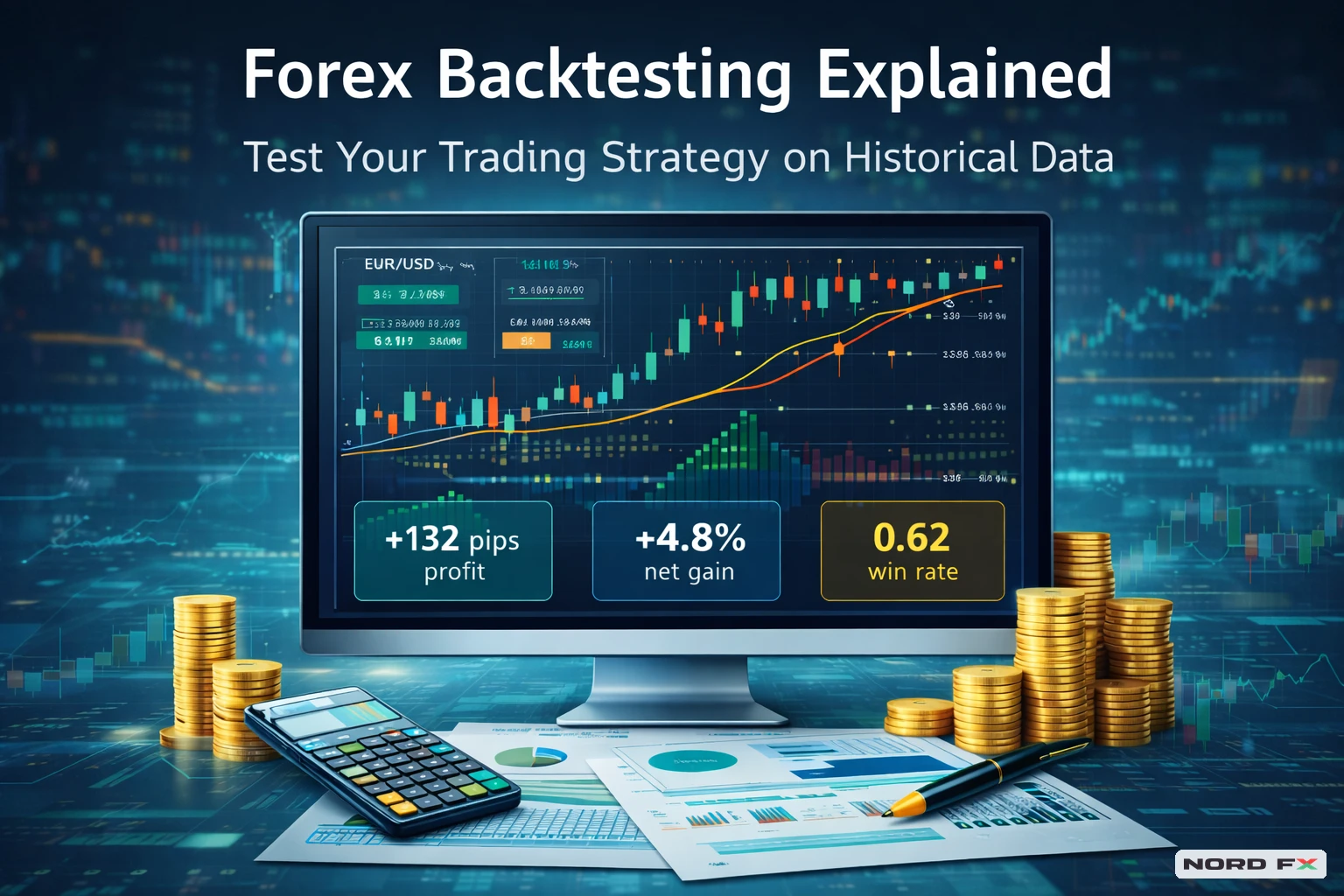
Backtesting in forex trading is the process of applying a predefined trading strategy to historical price data in order to evaluate its past performance. Traders follow their entry and exit rules as if they were trading in real time and record the results of each trade.
The purpose of backtesting is not to predict future price movements. Instead, it helps traders understand probabilities, measure consistency, and assess whether a strategy is logically sound. A strategy that performs poorly in backtesting is unlikely to perform well in live trading, while a strategy that shows stable results across different market conditions may be worth further testing.
What Data Is Used for Forex Backtesting?
Forex backtesting relies on historical market data, including open, high, low, and close prices, as well as timeframes and trading sessions. For realistic results, traders should also account for spreads, execution delays, and market volatility.
The quality of historical data is critical. Inaccurate or incomplete data can lead to misleading conclusions, especially for short-term or intraday strategies. Traders should always ensure that the data source reflects realistic market conditions and typical execution costs.
Why Is Backtesting Important for Forex Traders?
One of the main advantages of backtesting is improved trading consistency. When traders know that their strategy has been tested on historical data, they are more likely to follow their rules during both winning and losing periods.
Backtesting also plays an essential role in risk management. By analysing historical drawdowns and losing streaks, traders can adjust position size, stop-loss placement, and overall exposure more realistically. This is particularly important when trading leveraged instruments in the forex market, where small price movements can have a significant impact on account balance.
Another key benefit is emotional control. Traders who skip backtesting often abandon strategies too quickly or overtrade during volatile periods. Backtesting provides a data-driven foundation that reduces emotional decision-making and promotes long-term discipline.
How to Backtest a Forex Trading Strategy Step by Step
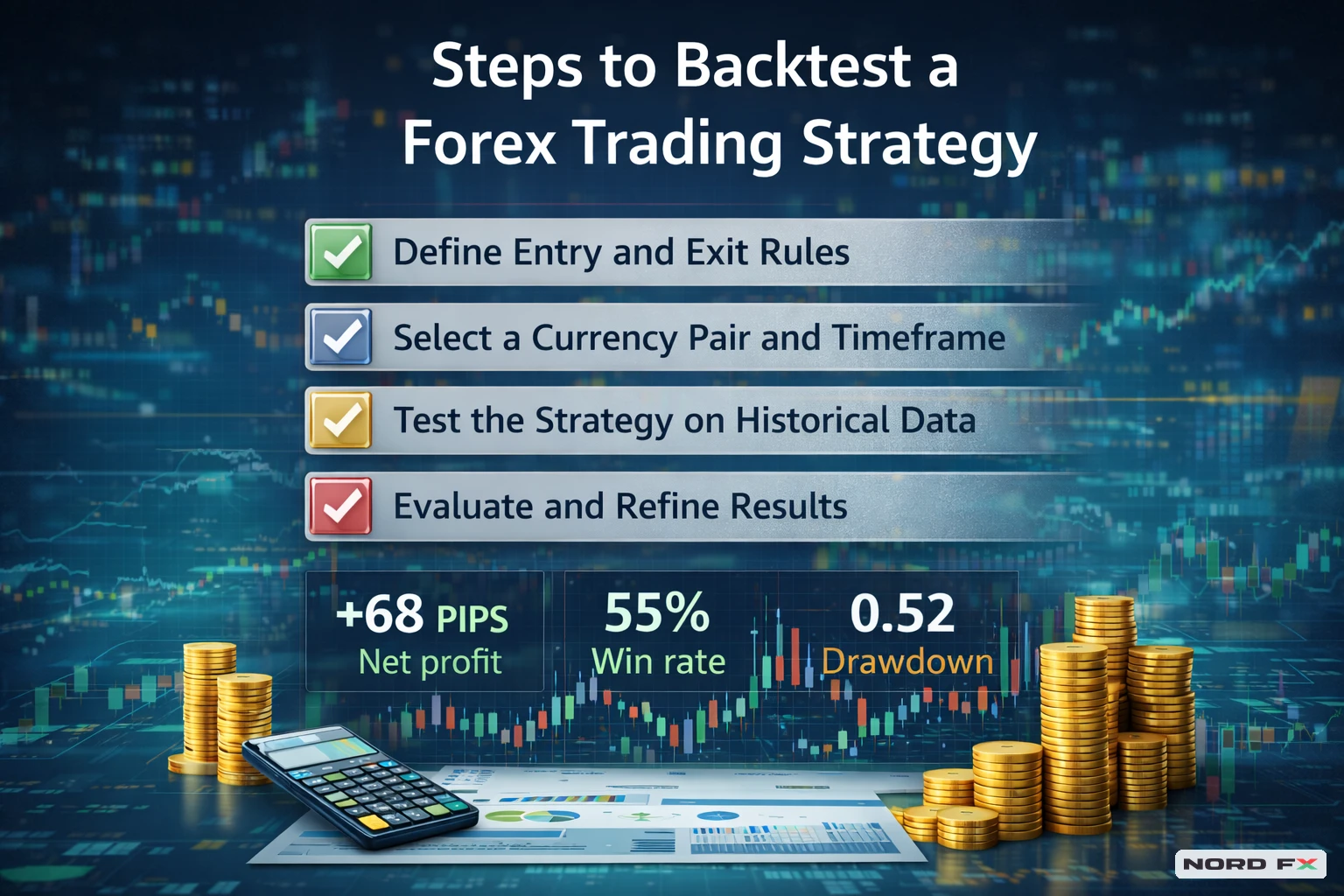
The first step in backtesting is defining clear and objective trading rules. Entry conditions, exit criteria, stop-loss levels, and take-profit targets must be unambiguous. A strategy that cannot be clearly described cannot be reliably tested.
Next, traders choose a suitable market and timeframe. A strategy designed for major currency pairs on higher timeframes may not perform well on lower timeframes or exotic pairs. Consistency between the strategy concept and the tested market is essential.
The strategy is then applied to historical charts. Each trade is recorded, including entry price, exit price, stop-loss, take-profit, and final outcome. After completing the test, traders analyse performance metrics such as win rate, average profit and loss, maximum drawdown, profit factor, and risk-to-reward ratio.
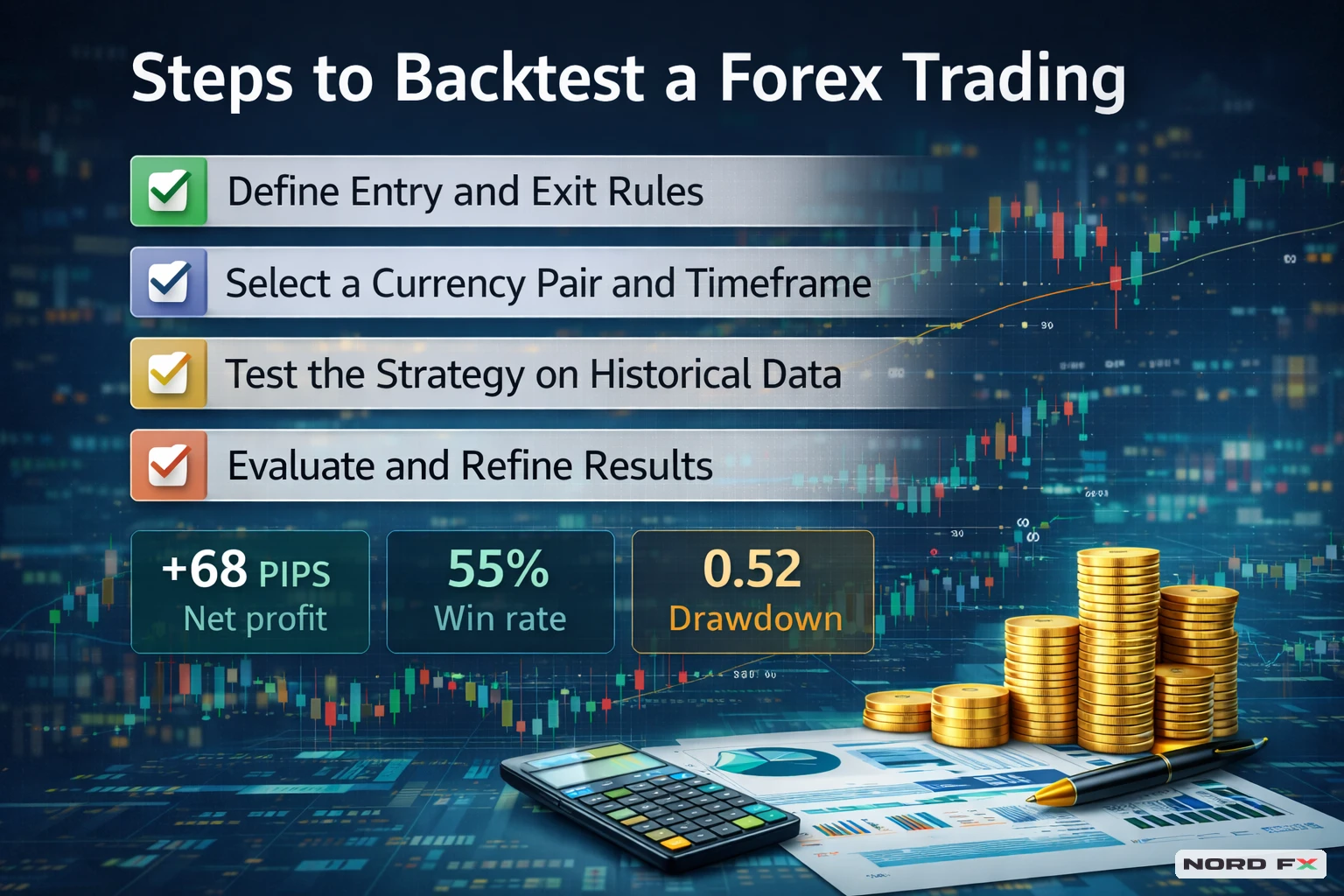
This analysis helps traders decide whether the strategy should be refined, tested further, or discarded.
Best Tools for Backtesting Forex Strategies
Many traders perform backtesting using the MetaTrader trading platforms, which are widely supported by brokers and offer built-in tools for strategy testing. Both MetaTrader 4 and MetaTrader 5 include strategy testers that allow traders to analyse automated systems and historical price behaviour. Traders can learn more about these platforms in the sections dedicated to MetaTrader 4 and MetaTrader 5 on the NordFX website.
Manual backtesting is also popular, especially among discretionary traders. By scrolling through historical charts and simulating trades bar by bar, traders gain a deeper understanding of market structure, price action, and behavioural patterns.
Some traders use advanced tools such as spreadsheets or custom data analysis software to perform statistical evaluation. While these methods require more technical knowledge, they allow for deeper insight into strategy robustness and long-term performance stability.
Key Metrics to Analyse During Backtesting
To properly evaluate a trading strategy, traders should focus on more than just total profit. Important metrics include win rate, average profit per trade, average loss per trade, maximum drawdown, and risk-to-reward ratio.
Another valuable metric is the profit factor, which compares gross profits to gross losses. A strategy with a lower win rate can still be profitable if average winning trades significantly exceed losses. Backtesting helps traders understand these relationships and avoid misleading conclusions based on isolated results.
Common Backtesting Mistakes Traders Should Avoid
One of the most common backtesting mistakes is curve fitting, also known as over-optimisation. This happens when a strategy is excessively adjusted to fit historical data perfectly, often by adding too many indicators or parameters. Such strategies usually fail when market conditions change.
Another frequent error is ignoring trading costs. Spreads, commissions, and slippage can significantly affect real trading results. When evaluating performance, traders should take into account realistic execution conditions, which depend on the chosen account type and trading environment. Information about execution and account conditions can be found in the section on NordFX trading accounts.
Using too little historical data is another common issue. A reliable backtest should include different market phases, such as strong trends, sideways markets, and periods of elevated volatility. Testing a strategy only during favourable conditions can lead to unrealistic expectations.
Forex Backtesting vs Crypto Backtesting
Although the principles of backtesting apply to all financial markets, there are important differences between forex and crypto trading. Forex markets generally have deeper liquidity, defined trading sessions, and more stable price behaviour. Cryptocurrencies, by contrast, trade 24 hours a day and often experience sharper price swings.
Because of these differences, strategies that perform well in forex may behave differently in crypto markets. Backtesting helps traders understand how volatility, liquidity, and market structure affect performance across different asset classes and adapt their approach accordingly.
What to Do After Backtesting a Trading Strategy
Backtesting should always be followed by forward testing. Once a strategy shows consistent results on historical data, traders should test it in real-time market conditions using a demo account. This step helps confirm that the strategy performs as expected when spreads widen, volatility increases, and execution conditions change.
Traders can practise strategy execution without financial risk by opening a free demo trading account. Demo trading bridges the gap between theoretical testing and live trading and allows traders to refine execution discipline and risk management.
Only after successful demo testing should traders consider applying a strategy to a live account, starting with conservative position sizing and clearly defined risk limits.
Final Thoughts
Backtesting is not about finding a perfect strategy or guaranteeing future profits. It is about preparation, probability, and discipline. Traders who invest time in proper backtesting gain a clearer understanding of how their strategies behave under different market conditions and are better equipped to manage uncertainty.
Whether trading forex, gold, or cryptocurrencies, backtesting remains a foundational skill that separates structured trading from random speculation. Traders who want to continue building their knowledge can explore additional educational materials in the NordFX Useful Articles section, which covers a wide range of trading concepts and market insights.
When combined with sound risk management and continuous learning, backtesting becomes a powerful tool for long-term trading development.